
Wooden Stretcher Bars
Gowin manufactures pine Wooden Stretcher Bars for stretched canvas production, printable and photo-canvas framing, wall-art production, framing operations, art-material distribution and OEM programs. An outer Stretcher Bar forms the wooden perimeter frame over which the canvas is stretched.
Our current product system includes 16 outer Stretcher Bar profiles and four internal Supporting Bar profiles, giving you 20 existing profiles to compare. If none matches your project, we can also review custom profile development from a complete drawing or physical sample.
Request Stretcher Bar Samples or a Quote
Wooden Stretcher Bar Product Ranges
The four ranges serve different profile and frame-system requirements. The complete project specification, rather than one dimension alone, should determine which direction you investigate.
| Range | Current Profiles | Best Used When | Explore |
|---|---|---|---|
| Standard Wooden Stretcher Bars | 9 outer profiles | Your project requires a profile for regular or general canvas-frame production. | View Standard profiles |
| Deep Profile Stretcher Bars | 3 outer profiles | Your frame specification calls for a deeper visible outer Stretcher Bar profile, including suitable gallery-wrap applications. | View Deep Profile options |
| Heavy Duty Stretcher Bars | 4 outer profiles | Your specification calls for one of Gowin’s designated Heavy Duty profile structures. | View Heavy Duty profiles |
| Supporting Bars & Bespoke Stretcher Bar | 4 internal profiles | Your outer frame requires internal support, or your project needs a profile outside the existing range. | View Supporting Bar and profile options |
Complete 20-Profile System
Gowin states profile dimensions as thickness × width. For example, 20 × 35mm means 20mm thickness × 35mm width. The dimensions below identify each current profile; they do not by themselves define performance or a maximum finished frame size.
| Product Family | Models and Profile Dimensions | Component Type |
|---|---|---|
| Standard Wooden Stretcher Bars | GW1624 – 16 × 24mm GW1629 – 16 × 29mm GW1635 – 16 × 35mm GW1838 – 18 × 38mm GW1840S – 18 × 40mm GW1845F – 18 × 45mm GW1935 – 19 × 35mm GW2035 – 20 × 35mm GW2040 – 20 × 40mm |
Outer Stretcher Bars |
| Deep Profile Stretcher Bars | GW2535 – 25 × 35mm GW3835G – 38 × 35mm GW3825X – 38 × 25mm |
Outer Stretcher Bars |
| Heavy Duty Stretcher Bars | GW3836X – 38 × 36mm GW3836F – 38 × 36mm GW3860 – 38 × 60mm GW5535 – 55 × 35mm |
Outer Stretcher Bars |
| Supporting Bars | GWD1435 – 14 × 35mm GWD1635 – 16 × 35mm GWD1635-G – 16 × 35mm GWD3828-G – 38 × 28mm |
Internal Supporting Bars |
GW3835G shows why family names cannot be assigned from dimensions alone: its 38 × 35mm profile belongs to the Deep Profile range. GW3836X and GW3836F both measure 38 × 36mm, but their complete profile shapes differ.
Choose the Right Stretcher Bar Profile
Profile selection starts with the complete project requirement. Confirm the required outer thickness and width, full cross-section shape, finished frame dimensions, canvas specification, stretching tension, corner and assembly method, internal support requirement, final application and order quantity. A family should not be selected from finished frame size alone.
When you are matching an existing product, provide a technical drawing with complete cross-section dimensions or a physical sample. For a more detailed explanation of the selection factors, read our Stretcher Bar profile selection guide.
Standard Wooden Stretcher Bars
The Standard range contains nine current profiles for regular and general canvas-frame production. Profile thickness, width and cross-section vary within the range, so selection should be based on the complete profile and frame requirement rather than finished canvas size alone.
Explore Standard Wooden Stretcher Bars.
Deep Profile Stretcher Bars
GW2535, GW3835G and GW3825X form the current Deep Profile range. These outer Stretcher Bars are considered when your project specifies a deeper visible profile, including suitable gallery-wrap canvas programs. A 38mm thickness does not automatically place a profile in the Heavy Duty family; the complete profile classification and cross-section still matter.
Explore Deep Profile Stretcher Bars.
Heavy Duty Stretcher Bars
The designated Heavy Duty range contains GW3836X, GW3836F, GW3860 and GW5535. These profiles are available when your project specification calls for one of Gowin’s more substantial Heavy Duty structures; the family is not defined by a universal thickness threshold or finished frame size.
GW3836X and GW3836F share the same nominal 38 × 36mm dimensions but have different complete profile shapes. When matching either profile, use a full cross-section drawing, complete dimensions or a physical sample rather than the nominal dimensions alone.
Explore Heavy Duty Stretcher Bars.
Supporting Bars & Bespoke Stretcher Bar
Internal Supporting Bars
A Supporting Bar is an internal wooden component used within an outer Stretcher Bar frame. Gowin’s current internal profiles are GWD1435, GWD1635, GWD1635-G and GWD3828-G.
Approximately 60cm on the long side can be used as a practical starting point for evaluating internal support, but it is not a mandatory threshold. The final requirement depends on the complete frame dimensions, outer Stretcher Bar profile, canvas specification or weight, stretching tension, support layout and final application.
A frame may use no Supporting Bar, one or more Supporting Bars, parallel supports or a cross-brace arrangement. Selecting the Supporting Bar profile and deciding its quantity or layout are separate decisions.
Bespoke Profile Requirements
If the existing range does not match your frame system, Gowin can review another thickness, width or cross-section from your technical drawing or physical sample. Feasibility, sampling, quantity and tooling conditions need to be confirmed before production.
Explore Supporting Bars & Bespoke Profiles.
20 Existing Profiles + Custom Development
Gowin’s 20 existing outer Stretcher Bar and Supporting Bar profiles cover many common market requirements, but you are not limited to the current range. We can review custom development for a special thickness or width, a different cross-section, a profile matching an existing product or another customer-specific specification.
A technical drawing with complete cross-section dimensions or a physical sample provides the preferred basis for matching. Custom development remains subject to technical feasibility, sample confirmation, MOQ or order requirements and agreed tooling conditions.
A new profile may require a mould or tooling charge, which is normally refundable after the agreed formal production order is placed, subject to the agreed order conditions.
Material & Manufacturing
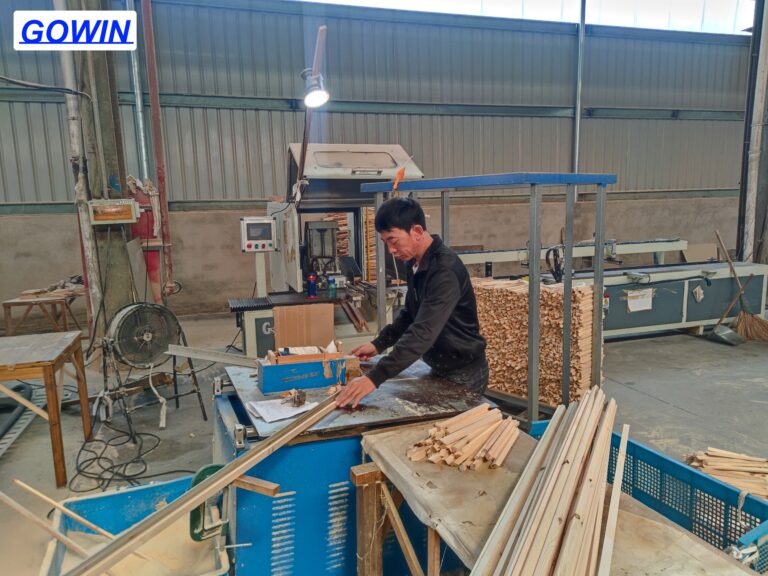
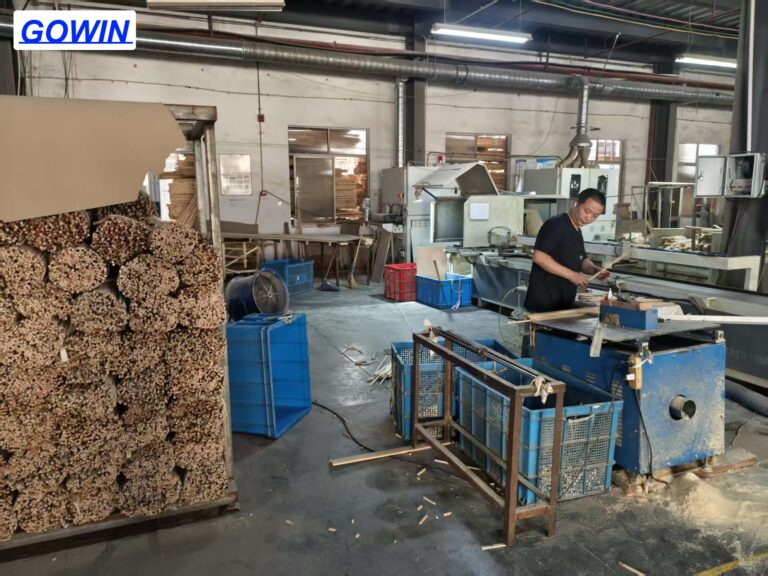
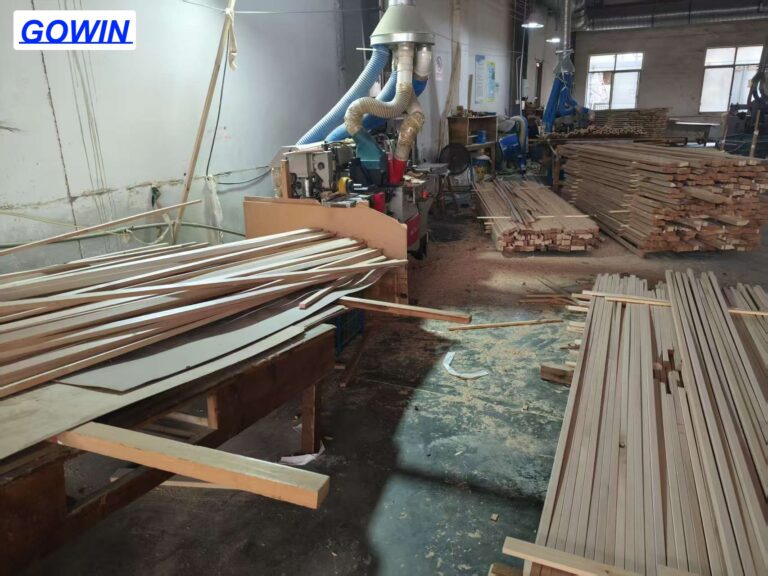
Gowin’s outer Wooden Stretcher Bars use pine wood. The wood is kiln-dried before machining, finger-jointed where applicable and smooth-sanded after machining. During production, the confirmed profile dimensions, straightness, surface condition, relevant corner fit and packing condition are checked.
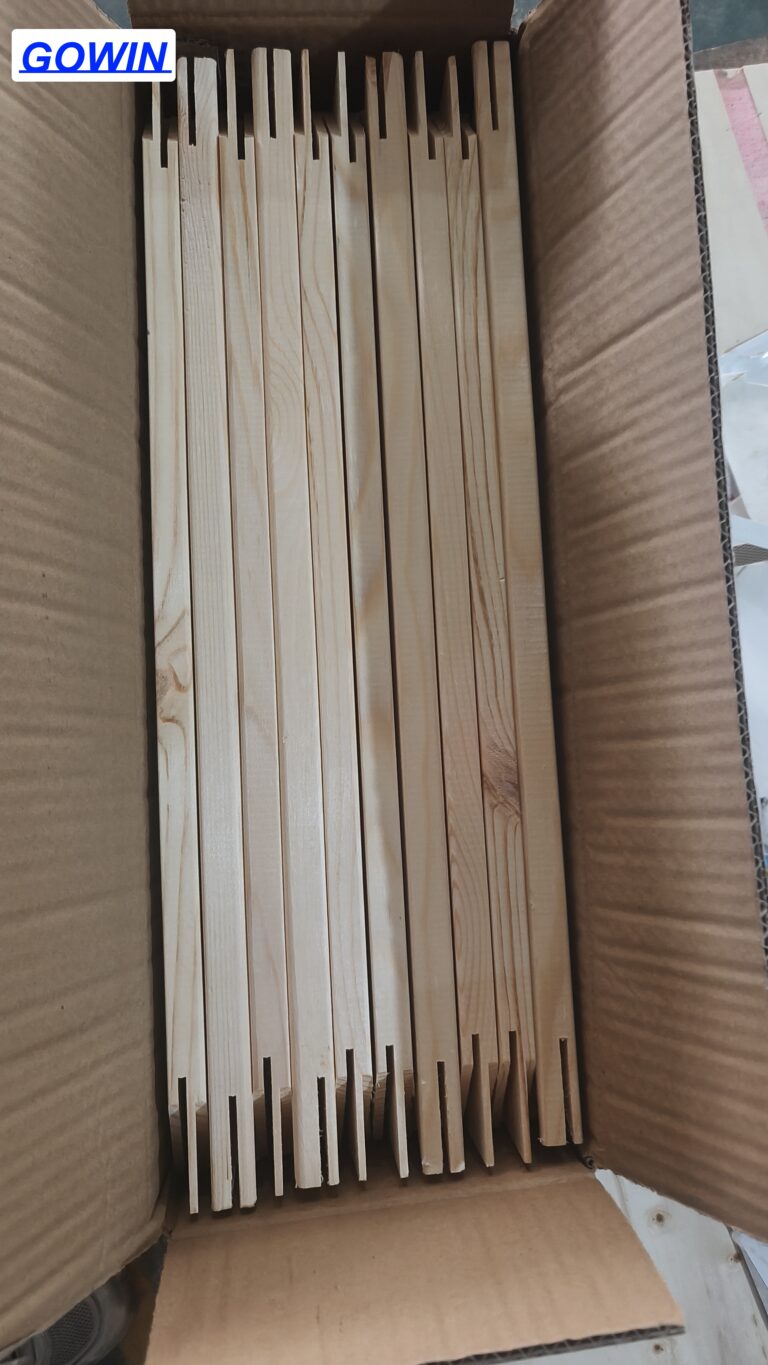
Tenoned and non-tenoned supply options are available for outer Stretcher Bars. Tenoned bars use machined corner joints for basic frame assembly, while non-tenoned supply can be selected when you have your own tenoning equipment or use another confirmed frame-assembly method. Applicable outer profiles have listed lengths up to approximately 300cm.
Regular pine may contain slight sound knots. If your program requires a cleaner appearance or another agreed grade, confirm this during sampling and quotation. Outer-bar length, corner and assembly information should not automatically be applied to internal Supporting Bars.
If you cannot visit the factory, you can also view production and assembly footage on Gowin’s YouTube channel.
Wholesale, Samples & OEM
| Order Item | Current Gowin Information |
|---|---|
| Outer Stretcher Bar MOQ | Typically 1,000 pieces per size; a lower quantity may sometimes be discussed according to the complete order. |
| Supporting Bar quantity | Confirmed according to the selected outer frame, Supporting Bar profile and required frame configuration. |
| Samples | Available for profile, surface and assembly confirmation. |
| OEM and private label | Packing and labeling requirements can be discussed according to the order. |
| Custom profile review | Available from a complete technical drawing or physical sample, subject to feasibility, sampling, MOQ and tooling confirmation. |
| Trade and delivery terms | FOB may be discussed for full-container orders; EXW is commonly used for other orders. DDP or door-to-door delivery may also be discussed depending on the destination and order conditions. |
Frequently Asked Questions
What are Wooden Stretcher Bars used for?
They form the outer wooden frame over which canvas is stretched for canvas art, photo canvas, wall decor and related frame-production programs.
What is the difference between Standard, Deep Profile and Heavy Duty Stretcher Bars?
Standard profiles serve regular canvas-frame production, Deep Profile bars provide a deeper visible outer profile, and Heavy Duty refers to Gowin’s designated GW3836X, GW3836F, GW3860 and GW5535 family. The correct range is confirmed from the complete profile and frame specification.
How do I choose the correct Stretcher Bar profile?
Compare the complete cross-section, required thickness and width, finished frame dimensions, canvas, stretching tension, corner structure and support requirement. For profile matching, send a complete drawing or physical sample.
When should a Supporting Bar be considered?
Approximately 60cm on the long side is a general starting point for evaluation, not a fixed rule. The complete frame, outer profile, canvas, tension, support layout and application determine the final requirement.
Can Gowin match my existing Stretcher Bar profile?
Yes, profile matching can be reviewed from a technical drawing with complete cross-section dimensions or a physical sample, subject to feasibility and sample confirmation.
Can you manufacture a profile that is not in the current 20-profile range?
Custom development can be reviewed for qualifying orders. Feasibility, sampling, MOQ and any required tooling conditions must be agreed before production.
What is the MOQ for Wooden Stretcher Bars?
The typical MOQ for outer Stretcher Bars is 1,000 pieces per size. A lower quantity may sometimes be discussed according to the complete order. Supporting Bar quantities follow the confirmed frame and profile requirement.
Are samples available?
Yes. Samples are available for profile and surface confirmation. For relevant outer Stretcher Bars, corner fit and assembly requirements can also be confirmed before bulk production.
Send Your Wooden Stretcher Bar Requirements
For an initial review, send the required profile or model if known, finished frame dimensions, required bar length, quantity, tenoned or non-tenoned requirement and any known Supporting Bar requirement. For a custom profile, include a technical drawing with complete cross-section dimensions or a physical sample.
We will confirm the additional information needed for sampling and quotation.